Follow Me On Social Media!

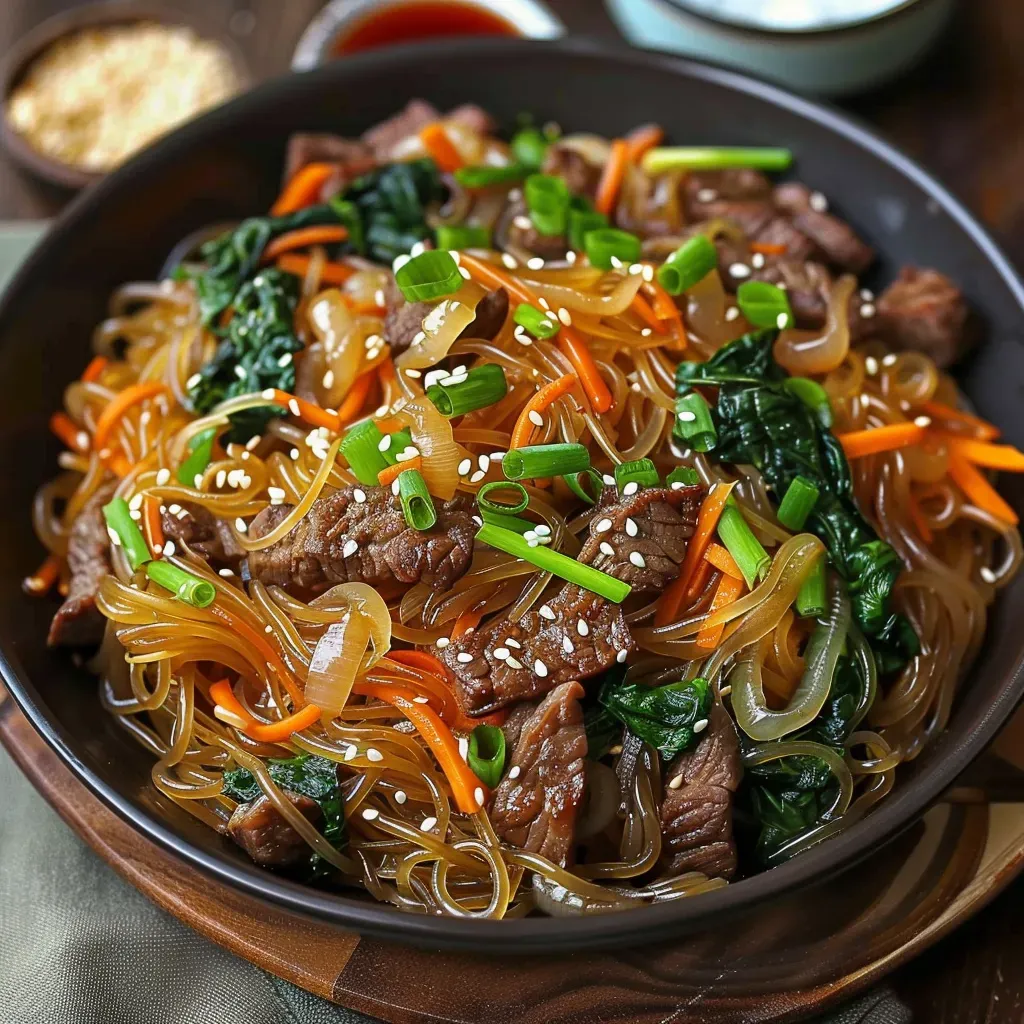
Introducing the delightful and versatile dish of Japchae! A must-try Korean classic that perfectly marries chewy sweet potato glass noodles with a colorful array of vegetables and your choice of protein, be it beef, chicken, tofu, or shrimp. The balance of savory soy sauce, nutty sesame oil, and a touch of brown sugar creates a harmonious flavor profile that’s both comforting and light. Japchae’s appeal lies in its contrast of textures, from the springy noodles to the tender meat and vibrant vegetables, making each mouthful a delightful experience.
My first encounter with Japchae left me enchanted by its glistening noodles and harmonious blend of flavors. It has since become my go-to recipe for gatherings, always eliciting smiles and second helpings. This dish is not only a visual feast but also a satisfying meal that can be enjoyed warm or at room temperature. Whether you follow the traditional beef version or opt for a vegetarian twist, Japchae is a dish that embodies the heart and soul of Korean cuisine, offering a perfect balance of taste, texture, and adaptability.
Quick Benefits
- Irresistible chewy texture of Korean sweet potato noodles
- Perfectly balanced savory-sweet flavor profile with soy sauce, sesame oil, and brown sugar
- Complete meal with protein and colorful vegetables
- Leftovers taste even better the next day as flavors continue to develop
Why You’ll Love This Authentic Korean Japchae Recipe: Delicious Stir-Fried Glass Noodles Recipe
- Unique Texture: The sweet potato glass noodles offer a chewy texture unlike any other pasta, making each bite interesting and satisfying.
- Balanced Flavor Profile: The savory depth from soy sauce, nutty richness of sesame oil, and gentle sweetness of brown sugar create a harmonious blend that satisfies cravings without being too heavy.
- Complete Meal: Packed with protein from beef and a variety of colorful vegetables, Japchae is a wholesome and satisfying dish.
- Leftovers Get Better: As the flavors meld together, leftovers taste even better the next day, making it a great option for meal prep.
- Impressive Yet Simple: Perfect for both hosting guests and quick weeknight dinners, Japchae is a versatile dish that’s sure to impress without being overly complicated to make.
Ingredients for Authentic Korean Japchae Recipe: Delicious Stir-Fried Glass Noodles
Main Ingredients
- 2 lb thin-sliced beef (or sub with chicken, tofu, or shrimp)
- 1/2 bunch green onions, chopped
- 1 large white onion, thinly sliced
- 1 lb Korean sweet potato noodles (glass noodles)
- 1/2 lb spinach leaves
- 3 medium carrots, julienned
- 6 garlic cloves, minced
Sauce & Seasonings
- 3 tbsp brown sugar
- 6 tbsp soy sauce (or tamari for gluten-free)
- 4 tbsp sesame oil (divided)
- 1 tbsp olive oil
Pro Tips for Authentic Korean Japchae Recipe: Delicious Stir-Fried Glass Noodles
Pro Tip 1: To achieve the perfect chewy texture for the sweet potato glass noodles, avoid overcooking them. Cook just until they are al dente and still slightly firm to maintain their signature texture.
Pro Tip 2: For enhanced flavor, consider tossing a tablespoon of the reserved beef juices with the noodles. This simple step adds extra depth to the dish and ensures that every component is infused with delicious umami notes.
Pro Tip 3: For a visually appealing presentation and even cooking, aim for uniform slicing of all vegetables. Consistent shapes not only enhance the dish’s aesthetic but also help maintain a balanced texture in every bite.
How to Make Authentic Korean Japchae Recipe: Delicious Stir-Fried Glass Noodles
Step 1: Step 01
In a large pot, bring water and a drizzle of olive oil to a boil. Add sweet potato noodles and cook for 5-6 minutes. Drain and set aside.
Step 2: Step 02
Cook beef in a skillet over high heat until browned, seasoning with half of the soy sauce, sesame oil, and brown sugar. Set aside.
Step 3: Step 03
Heat olive oil in a skillet, then sauté julienned carrots and onion until softened. Stir in the rest of the soy sauce, sesame oil, and brown sugar. Add garlic and green onions, sauté for another minute.
Step 4: Step 04
Add spinach and stir until wilted, then combine with the noodles along with all vegetables and beef.
Step 5: Step 05
Combine all ingredients in a large bowl, ensuring they are well mixed. Serve warm and top with additional green onions, if desired.
📌 Pin for later!
Storage Tips
To store the finished Japchae, ensure it has cooled down to room temperature before transferring it to an airtight container. Refrigerate the dish promptly to keep it fresh and safe to eat. When properly stored in the refrigerator, Japchae can last for up to 3-4 days, allowing you to enjoy the flavors even more as they continue to meld together over time. Before serving leftovers, consider adding a drizzle of sesame oil to rejuvenate the flavors and prevent the noodles from drying out.
If you plan to freeze Japchae for longer storage, it’s best to freeze the dish without garnishes such as fried eggs or fresh herbs. Place the cooled Japchae in a freezer-safe container, leaving some space for expansion, and seal it tightly. Frozen Japchae can be kept for up to 2-3 months. To serve frozen Japchae, thaw it overnight in the refrigerator before reheating it gently on the stovetop or in the microwave, adding a touch of water or additional sauce to moisten the noodles if needed.
Ingredient Substitutions
For a vegetarian version of Japchae, you can easily substitute the thin-sliced beef with extra mushrooms like shiitake or oyster mushrooms, or pan-fried tofu. These alternatives provide a similar meaty texture and absorb the savory-sweet flavors of the dish beautifully. This swap allows you to cater to vegetarian diets while still keeping the dish flavorful and satisfying.
If you’re looking to reduce the carb content of the dish, you can opt to cut back on the Korean sweet potato noodles and double the amount of colorful vegetables like carrots, spinach, and onions. This adjustment not only decreases the overall carb intake but also adds more fiber and nutrients to the dish. The vegetables will still provide a satisfying crunch and vibrant colors, ensuring a well-balanced and delicious Japchae experience.
Serving Suggestions
To elevate your japchae experience, consider serving it in individual lettuce cups for a fun and interactive appetizer option. Simply spoon a generous portion of the savory-sweet noodles and vegetables into each lettuce cup, and top with a sprinkle of sesame seeds and a drizzle of chili sauce for a burst of flavor. Your guests will love the fresh crunch of the lettuce paired with the rich and vibrant japchae filling.
For a cozy and comforting twist on traditional japchae, try serving it in a sizzling hot stone bowl (dolsot). Fill the heated stone bowl with a generous portion of japchae, allowing the noodles to crisp up slightly on the bottom, adding a delightful crunch to each bite. Garnish with a fried egg on top for a creamy finish, creating a satisfying and visually stunning presentation that will impress your family and friends. This unique serving suggestion adds an extra layer of texture and flavor to the beloved Korean dish, taking it to the next level.
FAQs for Authentic Korean Japchae Recipe: Delicious Stir-Fried Glass Noodles
Can I make Japchae with a different protein instead of beef?
Yes, you can customize Japchae by using chicken, tofu, or shrimp instead of beef. Each protein brings its own unique flavor and texture to the dish, making it adaptable to different dietary preferences.
Where can I find Korean sweet potato noodles for Japchae?
Korean sweet potato noodles, also known as glass noodles or dangmyeon, are available at Korean or Asian grocery stores. They are essential to creating the signature chewy texture of Japchae.
How can I ensure that the noodles in Japchae remain perfectly chewy?
To keep the noodles chewy, avoid overcooking them. After rinsing, consider snipping the noodles with kitchen shears into shorter lengths for easier handling and to prevent them from becoming overly soft during cooking.
How can I enhance the flavor of Japchae?
To boost the flavor of Japchae, consider tossing a tablespoon of the reserved beef juices with the noodles for extra depth. Additionally, adding a drizzle of sesame oil before serving leftover Japchae can help refresh the flavors and prevent the noodles from becoming dry.
Conclusion
As you dive into making Japchae, remember that this dish is not just about the ingredients but also about the love and care you put into preparing it. The beauty of Japchae lies in its versatility, allowing you to customize it to your liking with different protein options and vegetables. So, embrace your creativity in the kitchen and make this dish your own!
Whether you’re a seasoned cook or just starting your culinary journey, Japchae is a wonderful recipe to add to your repertoire. Its vibrant colors, delightful textures, and harmonious flavors will surely impress your family and friends. So, gather your ingredients, set aside some time to enjoy the cooking process, and savor the rewarding experience of indulging in a bowl of homemade Japchae. Let the magic of Japchae bring warmth and joy to your table, creating lasting memories with each delicious bite.
📌 Pin for later!
Authentic Korean Japchae Recipe: Delicious Stir-Fried Glass Noodles
“Japchae: A harmonious blend of chewy sweet potato noodles, savory beef, and vibrant vegetables, creating a satisfying and light Korean dish.”
Prep Time30 Minutes
Cook Time30 Minutes
Total Time60 Minutes
CuisineKorean
Skill LevelIntermediate
Servings10 Servings (10 servings)
Ingredients
Main Ingredients
- 2 lb thin-sliced beef (or sub with chicken, tofu, or shrimp)
- 1/2 bunch green onions, chopped
- 1 large white onion, thinly sliced
- 1 lb Korean sweet potato noodles (glass noodles)
- 1/2 lb spinach leaves
- 3 medium carrots, julienned
- 6 garlic cloves, minced
Sauce & Seasonings
- 3 tbsp brown sugar
- 6 tbsp soy sauce (or tamari for gluten-free)
- 4 tbsp sesame oil (divided)
- 1 tbsp olive oil
Instructions
-
Step 01: In a large pot, bring water and a drizzle of olive oil to a boil. Add sweet potato noodles and cook for 5-6 minutes. Drain and set aside.
-
Step 02: Cook beef in a skillet over high heat until browned, seasoning with half of the soy sauce, sesame oil, and brown sugar. Set aside.
-
Step 03: Heat olive oil in a skillet, then sauté julienned carrots and onion until softened. Stir in the rest of the soy sauce, sesame oil, and brown sugar. Add garlic and green onions, sauté for another minute.
-
Step 04: Add spinach and stir until wilted, then combine with the noodles along with all vegetables and beef.
-
Step 05: Combine all ingredients in a large bowl, ensuring they are well mixed. Serve warm and top with additional green onions, if desired.